Showing posts with label Photography. Show all posts

Monday, May 2, 2011

Camera recommendations


From time to time (or a little more often than that), I am asked by friends and family what camera they should purchase. As this question usually involves repeating myself repeatedly, I figured I'd put some of what I've learned in a handy blog entry.

This advice is by no means definitive. Every style of photography has different demands and different people use cameras in different ways. This list is intended for those who are buying a DSLR for the first time, for general photographic use, and want to get the best camera possible for their money.

As for point and shoot style digicams, I really don't have a recommendation any longer. There is so much sameness in every manufacturer's offerings. There are (not even) a handful of digicams aimed more towards a serious photographer, but they don't offer near the image quality or flexibility of even the lowest priced dslr.


Entry level: Pentax K-r
Surprise, eh? Pentax cameras are quite a bit harder to find in stores these days, but I think the K-r is the best blend of image quality and price that's currently available. The Pentax features the same tried-and-true sensor as the last generation Nikon D90 and D300, both of which are much more expensive cameras. This sensor gives the camera fantastic dynamic range and image quality that the competition at this price point doesn't have. Price? Around $550 on Amazon as I type this, or $650 as a two-lens kit.

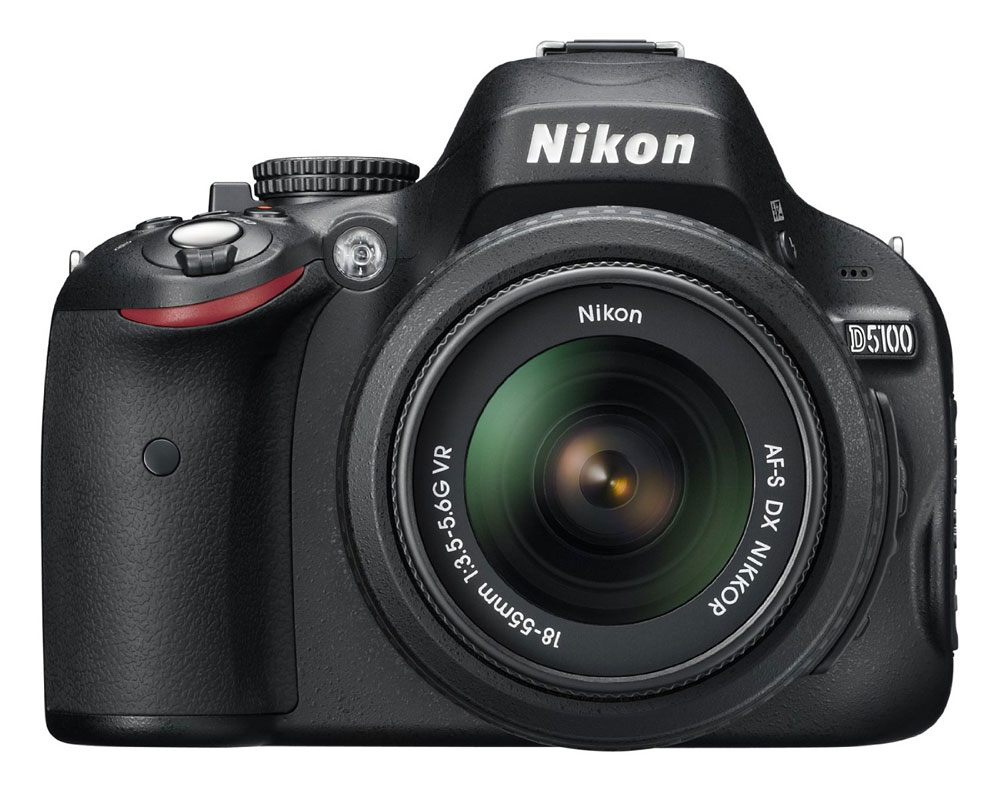
Mid-level: Nikon D5100
This camera just hit the market in the last couple of weeks, but it's a great value for anyone who wants to try out video as well as still images. The D5100 features a handy rotating, swiveling screen that can be used at all sorts of interesting angles. It also utilizes the latest 16 megapixel sensor from Nikon / Sony, a sensor with more resolution and even better dynamic range than the previously mentioned 12 megapixel sensor. The opening price is around $899 with a kit lens but will be sure to drop over the course of the next few months.

Prosumer: Nikon D7000
I recently downsized to a Nikon D7000 after shooting larger Canon full-frame sensor cameras for much of the past four years. The D7000 features the same sensor as the D5100 in a more robust body with a brighter, larger viewfinder that shows 100% of what will end up in the captured image. So far, I've been very impressed with the camera, especially the sheer amount of dynamic range available in the raw files, and have really enjoyed carrying around a lot less weight than I used to with the full frame lenses and camera. The D7000 is just small enough without being too small. Since the camera is still in heavy demand, it's price is holding steady at around $1199 for the body only or $1499 for the kit with the surprisingly good 18-105mm lens.


Beyond that, I'm sure most people spending in the ballpark of $2000 will have a good idea of what they are looking for. Currently, it would seem that everyone is waiting for replacements of the models that are currently out. I still think the Canon 5D MkII is the best camera in the $2-3000 price range, but wouldn't mind trying out the Sony A850 or A900. The Nikon D700 may be able to take pictures in the dark, but I'd rather have more resolution if I'm going to spend the money to shoot full frame.

As for the recent crop of micro four-thirds cameras from Olympus and Panasonic, as well as Sony's NEX system, I have trouble really recommending them at this time. Micro four-thirds (other than the slighty larger Panasonic GH1 and GH2) suffers from lower quality sensors with reduced dynamic range that can make noise in the shadows a problem. Sony's NEX system has potential, but there are hardly any lenses available for it. It will be interesting to see what happens once companies like Nikon and Pentax release mirrorless cameras, as has been rumored of late.

I'd really like try out a Fujifilm X100, if anyone wants to loan me $1200 to buy one. Your support is much appreciated...

Wednesday, July 14, 2010

Shop talk


I must preface this post with a simple fact: I detest what qualifies as discussion of digital photography on the internet. There's simply too many people with too much money spending way too much time arguing over tiny differences that have little to do with what makes a good photograph.

That said, I do get asked from time to time about the equipment I use. I assure you that this information is far from being all that interesting, but I have promised a post like this on more than one occasion. So, here goes..


The Cameras
I have used my fair share of cameras since I seriously began pursuing photography. When I started out, I used Canon and Nikon 35mm film cameras for most of my work in school. Eventually, I shot my first full series with a borrowed Bronica SQ-A and a Hasselblad 500 c/m, medium format film cameras that capture a square image. The untitled series on my website was shot with these cameras. When I first envisioned what would become ninety-three, I planned to shoot it with a medium format film camera, either the Hasselblad or a Mamiya.

On what amounted to a whim, I purchased a Canon 5D digital slr when the price got to be quite low (relatively speaking) with the rebates that were running at the time. I was assuming I'd photograph a few more weddings here and there, and it seemed that the 5D would replace 35mm film cameras for more casual work. At the time, I was still set on photographing Nebraska on color film.

In May of 2007, some very good friends coaxed me to take a road trip to Glacier National Park with them. I figured the 5D would be perfect for the trip, small and easy to carry, yet with enough image quality to make sizable prints that I would be happy with. I quickly found the camera to be a productive tool. After an aborted attempt to begin ninety-three with a Mamiya 645 film camera, I ended up setting out with the 5D when I began the project in earnest.

My shooting style with the medium format cameras was somewhat cumbersome and, while I am not a "decisive moment" photographer by any means, I felt it was getting in the way of cataloging the world in the way my brain does. I have the utmost respect for anyone who sets out with a giant view camera and heavy tripod. I learned fairly quickly that I am just not that guy. The Canon 5D gave me the mobility I enjoyed and color photographs of a quality more in-line with the medium format film I used before. The original 5D lacked a bit of resolution and sometimes the more limited dynamic range was frustrating, but the Mark II version really improved on both counts. All of ninety-three was shot with these two cameras.

The post-thunderstorm photograph above was taken with a recent purchase, an Olympus EP-2. I haven't used the camera extensively yet, but it's small enough to hide in my glovebox and the quality is much better than any point-and-shoot digicam that I've seen. As they always say.. The best camera is the camera that is with you.


The Lenses
My experience with lenses has been far more complicated than the camera story. With medium format, it was always the standard lens, 80mm for the Hasselblad and Bronica. That made things easy. I had a 28-105mm lens that I used a lot with a Nikon N80 film camera, but a vast majority of my shooting with 35mm film was with a standard 50mm lens.

With the 5D, I've owned all of the following Canon lenses at one time or another: 17-40mm F4, 24-70mm F2.8, 35mm f2, 50mm f1.4, 50 f2.5 macro, 70-200 f4 IS, and 135mm f2

The 50mm focal length is still my favorite. In fact, it's the only lens I currently own. If someone made a lightweight 28-50mm lens, that would cover almost everything I need. I sold the 17-40mm lens but will most likely be buying it again for a wide angle option. It's a nice lens, relatively small for what it is, with the ability to go really wide if necessary. The distortion isn't too bad from around 24mm on up.

As for the rest of the lenses... The 24-70 f2.8 is a great lens, maybe a little soft on the long end, but I got tired of its sheer size. The 35mm f2 is built like a toy and is pretty much awful in the corners up to f4, but gives very good results around f8. I bought the macro lens to shoot distortion-free detail shots but hardly ever used it. The 70-200 f4 IS is pretty much an amazing lens. Sharp at every aperture, crazy good image stabilization, and fairly lightweight. I used it to shoot much of ninety-three but its telephoto range just doesn't fit my style anymore. The 135mm is very sharp, even wide open, but I found it to be too long even for portraiture.


I think that just about covers it. When it comes down to it, I'm really very simple when it comes to making photographs. I don't carry a giant bag with an assortment of lenses and who knows what else. Instead, I tend to walk around with a camera and one lens. I've found that having too much stuff just gets in the way of what I'm attempting to do.

Right now, I am debating shooting my next large scale project with 35mm black and white film. Just an old camera body with a 28mm lens and another with a 50mm lens. It has been quite a while since I've shot anything in black and white, and I miss the look of it. Ilford HP5 has been calling my name.