Showing posts with label Gear. Show all posts

Saturday, May 18, 2013

The sasquatch no longer has any pizza

Butler County (Rising City) (2007)

Rising City (2013)


It is with sadness that I bid adieu to the subject of one of my favorite photographs from ninety-three, the infamous Sasquatch Pizza sign that adorned a convenience store along Nebraska Highway 92 in Rising City.

The first photograph was taken in July of 2007 as I passed through on my way home on one of the first few treks I made to discover Nebraska. At the ninety-three show at Hot Shops, this was the image that got the most comments and smiles. I must have told at least a dozen people where it was located.

Unfortunately, since I last passed through Rising City in 2010, the little store had a change of ownership and became "Fergy's Cafe" which has now gone out of business. Poor ol' Sasquatch Pizza was defaced horribly at some point and now is just barely visible. The edges of his face are still there under the ugly black spray paint, sort of haunting and sad, with that goofy smile somehow still there in spirit.

I'm reminded of the work of one of my favorite photographers, William Christenberry, and his ambition to photograph some of Alabama's vernacular architecture over the course of many decades. If his photographs are any indication, this building will still somehow have several more lives over the next twenty or thirty years.

-----------------------------------------------

A word of advice from someone who should know better. If you buy a new (or used) camera, run it through its paces before you rely on it for anything that is time consuming or that will be difficult (or impossible) to shoot again.

I picked up a refurbished Nikon D600 as a backup body and this little trek I made Friday was my first time out with the camera. Unfortunately, it has a problem stopping down lenses and consistently overexposed images by a stop or two (or three) and left me with much less depth of field than I expected. So it goes back.

Live and learn, folks. Even expensive cameras can be lemons.

------------------------------------------------

Also visited on Friday: Hooper, Scribner, Snyder, Dodge, Olean, Howells, Clarkson, Leigh, Creston, St. Bernard, Cornlea, Humphrey, Platte Center, Columbus, Shelby, Garrison, David City, Brainard and Weston, Nebraska.

Friday, February 15, 2013

February (Thus far...)

February has, to this point, been about rediscovering black and white photography. I'd add 35mm film to that, but I've been shooting with a small Olympus digital camera, the E-M5. It's really quite a fantastic little package with tremendous image quality, even with the pocket-sized 14-42mm kit lens. 

The last time I gave camera suggestions, I was unable to recommend any of the micro 4/3 cameras. Now I can highly recommend any of the latest Olympus models (the aforementioned E-M5 along with the E-PL5 and E-PM2) to anyone who is looking to take high quality photographs with the smallest package possible. Olympus' latest imaging sensor has finally caught up with the DSLR world.

You can't expect miracles, obviously, but I'd say the results are better than what I got with the old full frame Canon 5D. There's definitely a difference in outright image quality between so-called full frame and cropped frame cameras, especially when it comes to fine detail and depth. Just think of a camera with a 4/3 or APS-C sensor as the new 35mm and a full frame camera like the Nikon D800 to be the new medium format. Both have their own advantages and can deliver results that are exhibition worthy. Bigger will mean better in most ways.. but also much more expensive.

Here are a few photographs from the first half of February for your viewing pleasure: 


Places visited: Council Bluffs, Missouri Valley, Logan, Woodbine, Dunlap, Dow City, Arion, Earling, Tennant, Shelby and Minden, Iowa. Washington, Kennard, Arlington, Fremont, Ames, North Bend, Morse Bluff, Cedar Hill, Abie and Plasi, Nebraska.

Thursday, July 21, 2011

Kodak Ektar 100

My prior experience with color film was largely with Fujifilm's now defunct NPS 160. It produced a low contrast image with a lot of exposure latitude, something that gave images a certain look that I was really into at the time. This look stuck with me as I began shooting ninety-three. Over time, my tastes changed (and my processing skills improved) and I've settled on a bit different look for my images.

Recently, I've been shooting with about as new of a color film that exists in this now digital world. Kodak Ektar 100 was introduced in the fall of 2008. Ektar is an unusual sort of film, a negative film that behaves a lot like a slide film. It's more forgiving than most slide films, but offers a lot more contrast than typical negative films.


I have recently found myself drawn to the Kodachrome images of photographers like William Christenberry and Saul Leiter rather than the sort of pristine perfection of someone like Stephen Shore's large format work. With this in mind, Ektar has been the perfect film for a somewhat sloppy photographer like myself to come back to. It's not as picky about exposure as slide film, but has a certain look that is pretty much exactly what I was looking for.

Ektar is very sharp film with a fine grain structure. It appears to scan well from what I've seen so far, although I'm without a scanner to really dig into just how much detail is there. Even the machine scanned files look pretty good printed at 18x12, if a little short on resolution upon close examination.

I've settled on Dwayne's Photo in Parsons, Kansas for film processing and basic scanning. The quality is top notch and they offer a fast turn around. I send a few rolls out in a Priority Mail flat-rate box and I get a package back in the mail a week later. The wait has taken some getting used to, but it's been worth it. The results are great and it's immensely satisfying to carry around this tiny camera and lens that are worth less than $100 altogether.


I'm looking to debut the South Omaha photographs sometime next year, perhaps in May at Hot Shops Art Center. Stay tuned for more details, as they say.

Sunday, May 8, 2011

A new beginning...


It was almost a year ago that I found myself happily unemployed and toyed with creating a document of the South Omaha I had come to love since moving to this part of town. After a somewhat feeble attempt at starting the project, I put it on the back burner and continued to put a bit of polish on ninety-three instead. Today, I spent the afternoon photographing South Omaha once again, restarting what I hope will hold my attention and bring inspiration to me.

I have decided to shoot color film for the first time in a few years. Pictured above is the Minolta XD-5 SLR that I purchased a few weeks ago along with 35mm and 50mm lenses. It was manufactured in 1979, the same year I was born. The hope is that the older camera will seem less conspicuous than an all black, modern DSLR and people will be a little more comfortable around it.

As I worked with the Minolta today, I remembered why I like these simple manual focus cameras so much. The viewfinder is tremendous, the subject snaps in and out of focus smoothly as I turn the lens' focusing ring. It's a bit like driving a car with a manual transmission. The operator feels more connected with the machine, more involved in the process of taking a photograph. The XD-5 doesn't have all the bells and whistles, but it feels solid and the lenses are wonderfully small and well-built.

After shooting with digital for so long, I found returning to film to be a bit of an adjustment. There's no confirmation as to whether you got everything right or if something went horribly wrong. Thirty-six exposures seems both small and large at the same time. The last frame can come up right in the middle of a burst of creativity. Or it waits off in the distance, taunting you to find enough potential subjects to finish the roll. I can't decide what is worse, wasting the last few frames or leaving a half-shot roll in the camera, anxious to see what magic you captured, unable to develop the film until it reaches its end.

Cross your fingers for me. I'll (hopefully) have some images later this week, thirty-year old camera permitting.


For the photo nerds in the audience who care about such things, I'm trying out Kodak's Ektar 100 film. It's supposed to be as close to transparency film as print film gets, with the least grain of any color film. This is actually the first time I've ever shot Kodak color film. All of my older projects were shot with the now defunct Fujifilm NPS 160 film.

Monday, May 2, 2011

Camera recommendations


From time to time (or a little more often than that), I am asked by friends and family what camera they should purchase. As this question usually involves repeating myself repeatedly, I figured I'd put some of what I've learned in a handy blog entry.

This advice is by no means definitive. Every style of photography has different demands and different people use cameras in different ways. This list is intended for those who are buying a DSLR for the first time, for general photographic use, and want to get the best camera possible for their money.

As for point and shoot style digicams, I really don't have a recommendation any longer. There is so much sameness in every manufacturer's offerings. There are (not even) a handful of digicams aimed more towards a serious photographer, but they don't offer near the image quality or flexibility of even the lowest priced dslr.


Entry level: Pentax K-r
Surprise, eh? Pentax cameras are quite a bit harder to find in stores these days, but I think the K-r is the best blend of image quality and price that's currently available. The Pentax features the same tried-and-true sensor as the last generation Nikon D90 and D300, both of which are much more expensive cameras. This sensor gives the camera fantastic dynamic range and image quality that the competition at this price point doesn't have. Price? Around $550 on Amazon as I type this, or $650 as a two-lens kit.

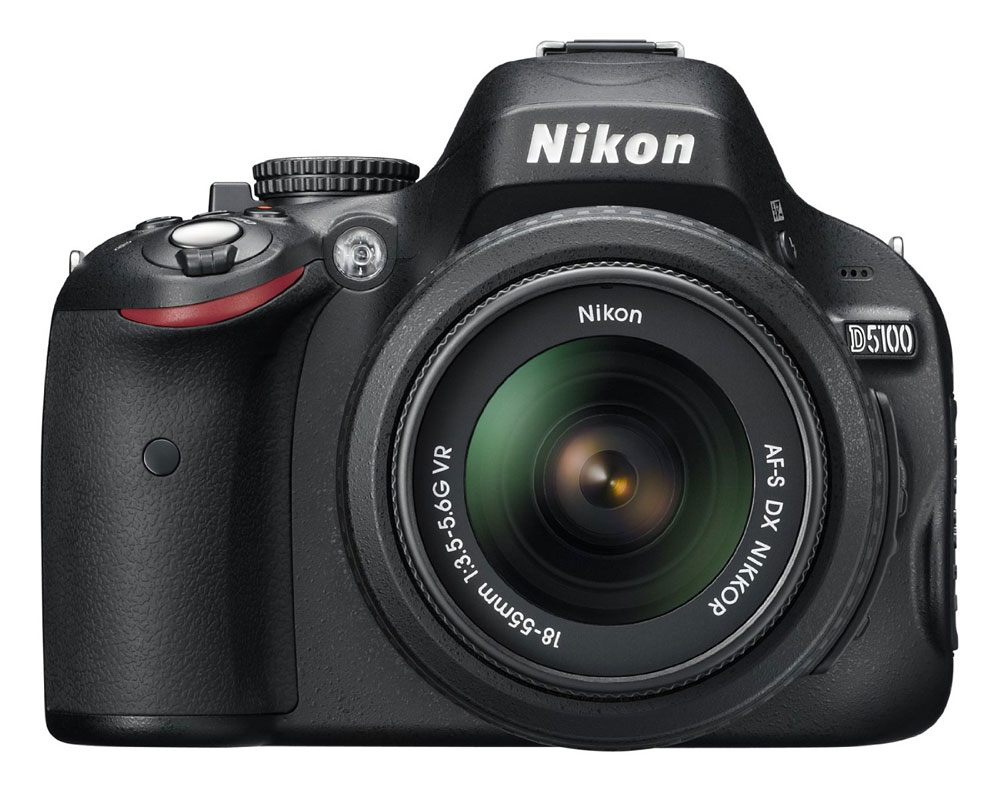
Mid-level: Nikon D5100
This camera just hit the market in the last couple of weeks, but it's a great value for anyone who wants to try out video as well as still images. The D5100 features a handy rotating, swiveling screen that can be used at all sorts of interesting angles. It also utilizes the latest 16 megapixel sensor from Nikon / Sony, a sensor with more resolution and even better dynamic range than the previously mentioned 12 megapixel sensor. The opening price is around $899 with a kit lens but will be sure to drop over the course of the next few months.

Prosumer: Nikon D7000
I recently downsized to a Nikon D7000 after shooting larger Canon full-frame sensor cameras for much of the past four years. The D7000 features the same sensor as the D5100 in a more robust body with a brighter, larger viewfinder that shows 100% of what will end up in the captured image. So far, I've been very impressed with the camera, especially the sheer amount of dynamic range available in the raw files, and have really enjoyed carrying around a lot less weight than I used to with the full frame lenses and camera. The D7000 is just small enough without being too small. Since the camera is still in heavy demand, it's price is holding steady at around $1199 for the body only or $1499 for the kit with the surprisingly good 18-105mm lens.


Beyond that, I'm sure most people spending in the ballpark of $2000 will have a good idea of what they are looking for. Currently, it would seem that everyone is waiting for replacements of the models that are currently out. I still think the Canon 5D MkII is the best camera in the $2-3000 price range, but wouldn't mind trying out the Sony A850 or A900. The Nikon D700 may be able to take pictures in the dark, but I'd rather have more resolution if I'm going to spend the money to shoot full frame.

As for the recent crop of micro four-thirds cameras from Olympus and Panasonic, as well as Sony's NEX system, I have trouble really recommending them at this time. Micro four-thirds (other than the slighty larger Panasonic GH1 and GH2) suffers from lower quality sensors with reduced dynamic range that can make noise in the shadows a problem. Sony's NEX system has potential, but there are hardly any lenses available for it. It will be interesting to see what happens once companies like Nikon and Pentax release mirrorless cameras, as has been rumored of late.

I'd really like try out a Fujifilm X100, if anyone wants to loan me $1200 to buy one. Your support is much appreciated...